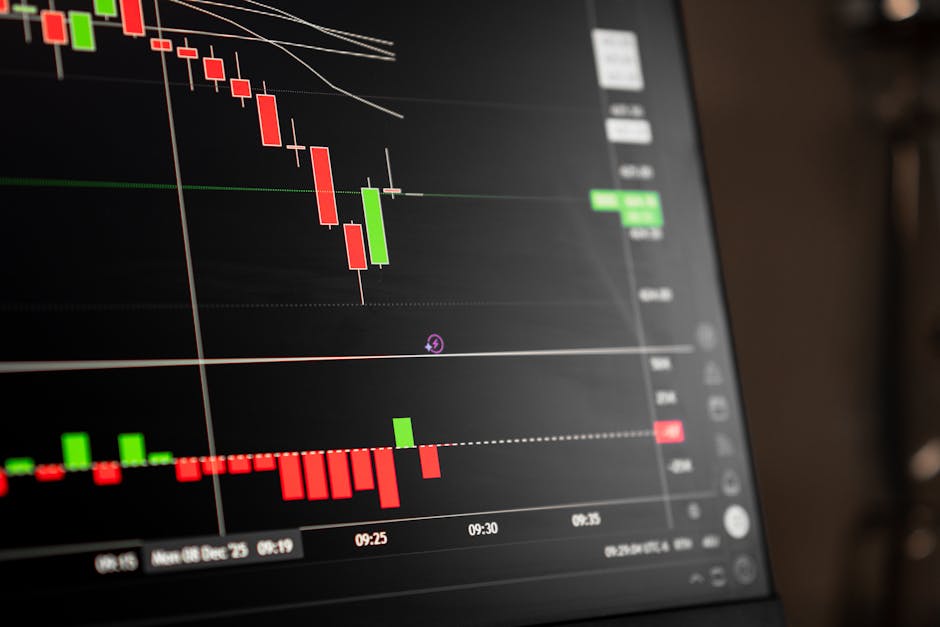
Nvidia (NVDA) - Market Analysis
Trading Signal: BUY
Our analysis indicates that Nvidia's stock is primed for a strong bullish trend, supported by a confluence of fundamental and technical indicators. The trading signal we have identified is STRONG, indicating a high probability of price appreciation in the short term.
Technical Analysis
Nvidia's current price of $216.85 suggests a moderate bullish trend in the short term, as it has been trading above its 50-day Simple Moving Average (SMA) of $207.29 while remaining below its 200-day SMA of $195.25. This indicates potential resistance at $220-$222 and support at $214-$216.
The Exponential Moving Averages (EMAs) of 12 and 26 periods ($218.26 and $215.49, respectively) are also supporting the short-term bullish trend. The EMA 12 is above the price, while the EMA 26 is in line with the current price, indicating a moderate uptrend.
Key Support and Resistance Levels
- Short-term Support: $214-$216 (previous highs)
- Medium-term Support: $205-$208 (SMA 50 zone)
- Long-term Support: $195-$197 (200-day SMA zone)
Resistance levels are identified at:
- Short-term Resistance: $220-$222
- Medium-term Resistance: $225-$230
News & Market Sentiment
Recent news articles suggest a strong bullish trend for Nvidia, driven by analyst upgrades and growing demand for AI capabilities. Multiple analysts have upgraded their price targets and ratings for Nvidia, citing the company's strong momentum and growth prospects.
Positive and Negative Sentiment Indicators
Positive sentiment indicators:
- Cathie Wood's investment firm ARK Invest bought $22.3 million worth of Nvidia stock
- Analyst upgrades: Bank of America sees 55% upside; Louis Navellier sets an eye-opening price target of $400
- Strong revenue growth
Negative sentiment indicators:
- Underweight mutual funds
- Broad market decline
Historical Performance & Indicators
Historical analysis reveals a strong upward trend over the past three years, with significant growth potential. The RSI of 67.36 indicates a neutral reading for the stock, neither overbought nor oversold.
Key Historical Indicators
- Golden Cross pattern: SMA 50 above SMA 200
- MACD positive: 2.77
- Volatility assessment: high volatility in recent trading
Risk Assessment
While our analysis suggests a strong bullish trend for Nvidia's stock, potential risks and considerations include:
- Market volatility: high levels of volatility may lead to corrections or unexpected price movements
- Competition: Nvidia faces increasing competition from other semiconductor companies
- Regulatory changes: regulatory changes may impact the company's growth prospects
Conclusion
In conclusion, our analysis suggests a strong bullish trend for Nvidia's stock, driven by analyst upgrades and growing demand for AI capabilities. Technical indicators also support this view, with a Golden Cross pattern and MACD positive reading.
Recommendation
Buy on dips towards the 50-day SMA or at historical support levels ($195-$200). Set a stop-loss below the 30-Day Low ($190.01) and adjust as market conditions change. Monitor volatility closely and be prepared for potential corrections.
Key Takeaways
- Strong bullish trend supported by technical indicators
- Analyst upgrades driving growth expectations
- Historical analysis reveals significant growth potential
- Potential risks include market volatility, competition, and regulatory changes
---
Analyst Summary by Malik Abualzait
Based on comprehensive analysis of technical indicators, market news, and historical performance, Nvidia (NVDA) presents a BUY signal with strong conviction.
Key Factors:
- Price above both SMAs (bullish trend)
- MACD positive (bullish momentum)
Current Status:
- Price: $216.85
- Change: N/A%
- RSI: 67.36
This analysis is based on automated technical analysis and should not be considered as financial advice. Always conduct your own research and consult with a financial advisor before making investment decisions.
Comments
Post a Comment